Dermatologist in Delhi
Dr. Sandesh Gupta Skin And Hair Problem Blog.

Home BlogMonth: February 2016
dermatologist in Delhi - Herpes Labialis

Herpes Labialis

Herpes simplex virus (HSV) infects the skin and mucous membranes, damaging keratinocytes and causing intense inflammation, seen as small blisters on a background of erythema. The primary infection may be obvious or subclinical; once latency is established in sensory ganglia, the virus may reactivate at variable intervals to produce visible lesions which often recur at… Read more

dermatologist in Delhi - Perioral Dermatitis

Perioral Dermatitis

Perioral dermatitis is an eruption of inflammatory papules (and sometimes pustules) on the chin, perioral areas, and nasolabial folds, characteristically sparing the skin immediately adjacent to the vermilion border. It is usually seen in young women, but also accurs in childhood. The development of perioral dermatitis is frequently preceded by intentional or inadvertent application of… Read more

dermatologist in Delhi - Vitiligo

Vitiligo

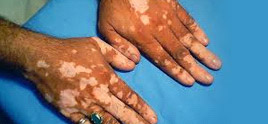
Vitiligo is an acquired idiopathic hypomelanotic disorder in which localized areas are devoid of melanocytes, resulting in depigmented macules which are often symmetrically distributed. Skin specialist in Delhi assumes the disease has 1-3% worldwide prevalence, with no predilection for age, sex, or race. About 50% of cases start before 20 years of age. Vitiligo can… Read more

dermatologist in Delhi - Alopecia Areata

Alopecia Areata

Alopecia areata (AA) is common skin condition seen in Skin clinics. It is T lymphocyte -mediated autoimmune disease of the hair follicle. It is characterized by patchy hair loss developing in otherwise normal skin, with ‘exclamation mark’ hairs around margins of expandings areas. most cases are limited to one or more coin- sized patches, in… Read more

dermatologist in Delhi - Acanthosis Nigricans

Acanthosis Nigricans

Acanthosis nigricans is characterized by hyperpigmented, verrucous or velvety plaques which usually appear on flexural surfaces and in intertriginous regions. It is most commonly seen in individuals with insulin resistance states, especially obesity, and less frequently in association with other metabolic disorders, drugs and malignancy and so many patients come for this problem in Dr… Read more


Video Procedure